 EN
EN  NL
NL 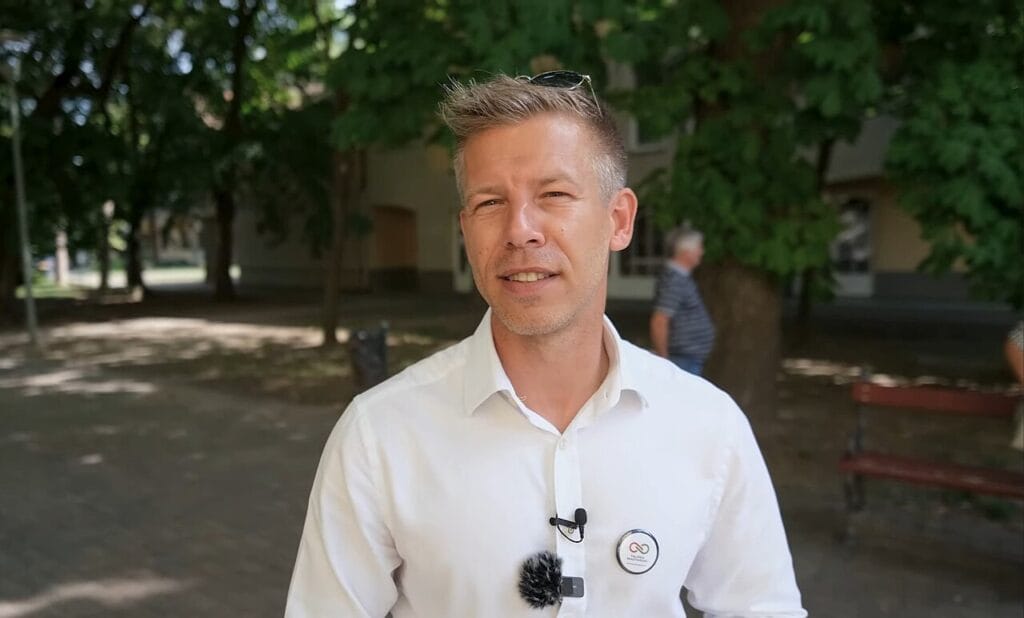
A revolution has taken place in Hungary: after 16 years, Viktor Orbán's illiberal autocracy has been swept away by a resounding electoral victory by Péter Magyar.
Magyar is not a shining example for European progressives. He is also certainly not the pro-European, pro-Ukrainian revolutionary that many would like to see in him. In many ways, Péter Magyar has mostly proved to be the right man at the right time: a dissident from within who, when the opportunity arose, seized the momentum to challenge the ruler, skillfully channelling the widely shared domestic frustration over widespread corruption, decaying infrastructure and rising living costs after 16 years of Viktor Orbán.
The specific Hungarian circumstances in which these elections took place mean that grand and hopeful assumptions about a possible European trend against right-wing populism would be misplaced and unfounded. In no country in the European Union has an autocrat been able to run his course as long and unrestrainedly as Orbán - to the point where a limit was reached, and forces turned against him. Orbán's defeat is, in this sense, especially similar to the British Conservatives' loss against Labour in 2024-also a result that was more a massive vote of no confidence in the incumbent than an ideological vote in favour of the winning party.
Yet there are sparkand of European and progressive hope from the Hungarian result. So what conclusions can be drawn from Péter Magyar's civic revolution?
I. Time, commitment and rapprochement: it works
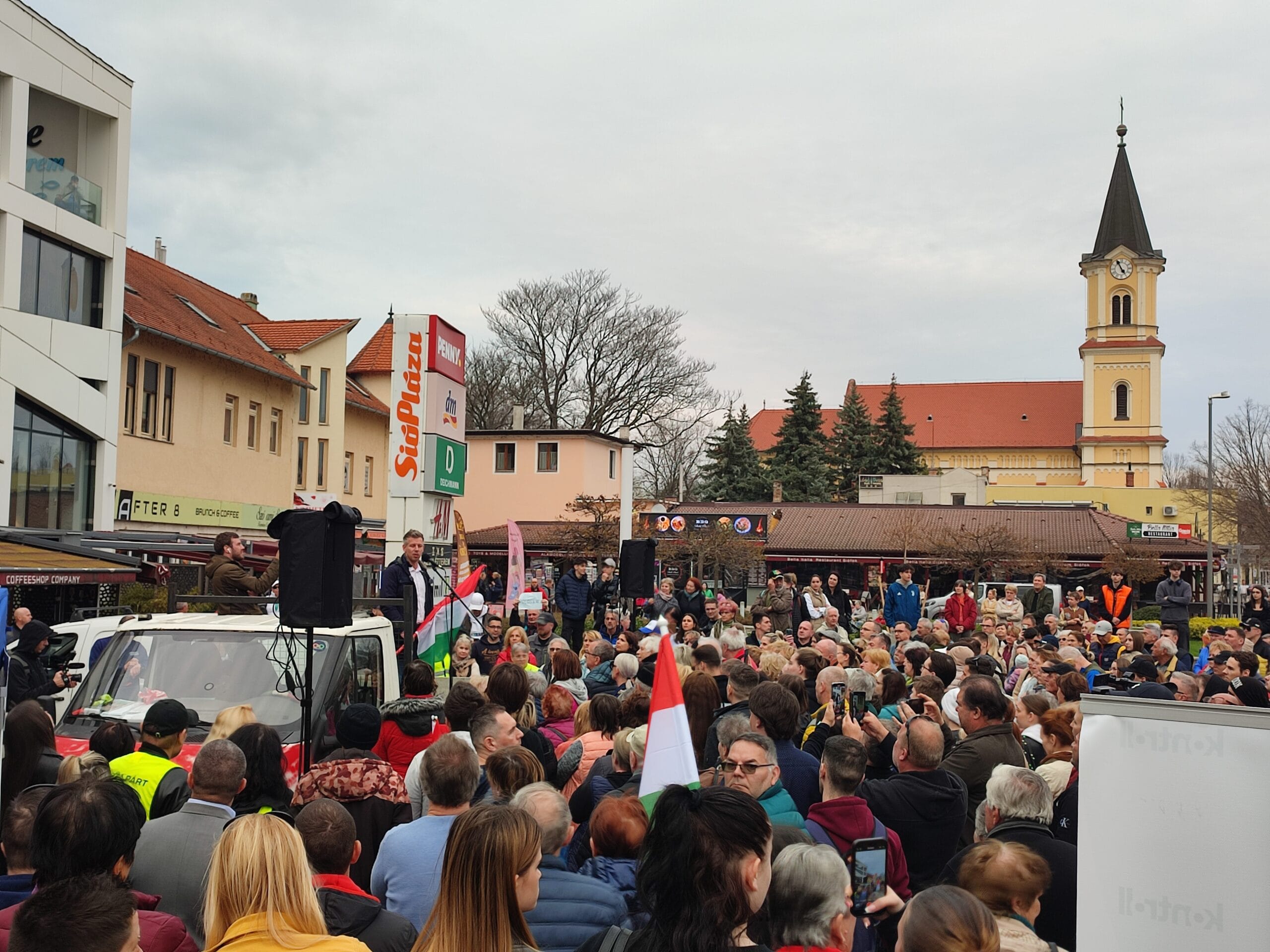
After his break with Fidesz in 2024, Péter Magyar travelled the country, visiting villages and places where no politician had shown up in years. It was precisely in those areas, traditionally held by Fidesz, that Magyar took two years to talk to people across Hungary about their living conditions, shortcomings, and discontent. Even in places where a few dozen people approached him, he frequently stayed for hours listening and talking.
Magyar almost had to: with Fidesz's complete dominance of the national media, he had no chance of reaching rural or older generation voters. Almost by necessity, he thus resorted to a campaign technique that has recently produced good results among leading progressives, such as Zohran Mamdani in New York and the Green Hannah Spencer in Manchester: deep canvassing.
The theory behind deep canvassing assumes there is only one way to combat radical-right scapegoating politics: intensive, in-depth door-to-door conversations. Research shows that this has an effect: it breaks down prejudices, and actually causes people to change their minds permanently. Merely going door-to-door at election time to convince voters is insufficient, according to this theory - the credibility of such a grassroots-campaign hinges on the actual willingness to be willing to listen to people, rather than come and ask something of them.
It doesn't work, assumes deep canvassing, to only contradict the populist sentiment that people fall for - that actually reinforces the contradictions and narratives that populists create. The anger or frustration that drives people into the arms of populists is often justified, and going against it can be misguided. This realisation is reflected in Magyar's campaign: instead of positioning himself ideologically diametrically opposed to Fidesz, by speaking outspokenly pro-Ukrainian, for example, he ignored Orbán's vilification and focused on the everyday shortcomings of Hungarian citizens.
With results, it turned out Sunday: Tisza won in rural constituencies that Fidesz took for granted, and thus managed to make the district system that Orbán had rearranged in such a way that it should favour him work against him.
II. Europeans hate Trump
Perhaps Péter Magyar will send a bunch of flowers to the White House one of these days. What is clear is that Viktor Orbán made a gigantic miscalculation in his campaign strategy: in the final weeks before the election, the Fidesz leader went all-in on his good ties with the US MAGA movement. While Magyar only outflanked his opponent by concentrating on mundane, domestic issues, Orbán mainly tried to show how important he was to the White House - including by flying in US foreign minister Marco Rubio and Vice President J.D. Vance.
An almost incomprehensible fallacy, which shows like no other how disconnected Orbán had become from his electorate - but one that progressive Europeans can make grateful use of. Donald Trump's US administration is immensely unpopular throughout Europe, even among radical-right voters.
That fact causes headaches for radical-right European parties, which have gained ground in many countries in recent years, but for whom a large part of the electorate is not waiting for an association with Trump and his ilk. So too did Italian Prime Minister Georgia Meloni: her relationship with Trump played a decisive role in her loss of a referendum on constitutional reform just weeks after the start of the US war against Iran. This week, Meloni - co-elected by a conservative-Catholic electorate - was forced into her first real fierce criticism of Trump after his unprecedented attacks on Pope Leo XIV.
So does France's radical-right Rassemblement National (RN), which appears to be on its way to a good starting point for the 2027 presidential election, is wary of a strong association with Trump. Such a 50% from the RN electorate takes a negative view of Trump - just to highlight the vulnerable corner into which radical right-wing European parties can be pushed. The US government did then strategically envisage to support and fund European radical right-wing parties, but in doing so could just as easily become primarily a kiss of death can give.
So the lesson for European progressives may just be that MAGAssociating works: no European is waiting for Trump's long arm in domestic politics, and singling out the links between MAGA and the European radical right makes the latter proven vulnerable.
III. The EU has a working toolbox
Hungarian discontent with Orbán is also partly due to the EU itself. Whereas the Fidesz leader still managed to combine anti-Brussels rhetoric with meeting EU funding requirements in the earlier years of his rule, Hungary's advanced democratic decline and rampant corruption led the European Commission to freeze some €18 billion of EU funds in 2022. That frozen funding, far from being the sole reason for Hungary's current economic malaise, was indeed a means of pressure which contributed to Orbán's fall. The importance Magyar attached to ‘unfreezing’ the EU funds in his campaign highlights the effect of the increasingly weighty conditionality (conditonalities) that Brussels builds in for its money supply.
A similar situation took place in Poland in 2023, where current prime minister Donald Tusk managed to defeat the radical-right PiS - and subsequently managed to release more than €100 billion of EU funds. Not surprisingly, Magyar's first foreign visit will be to Warsaw.
Despite Magyar not being a huge European by nature, the stronger attachment of rule-of-law conditions to EU funding thus did lead to an unwelcoming leader in an EU member state being able to come under great pressure internally. Thus, the EU toolbox also ensures that the people of a member state seek the solutions to their economic problems in major rapprochement with the EU, which an opposition candidate like Magyar can capitalise on.
European progressives and democrats should therefore not shy away from reaching for the toolbox of leverage more quickly if an EU member state shows autocratic tendencies - as is still the case in countries like the Czech Republic and Slovakia. The EU values democratic standards, even when it comes to demands on candidate countries. By intervening more quickly when deterioration occurs among its own member states, the EU makes itself more credible and trustworthy - outwardly, but also certainly to democratically minded residents of autocratic member states.
Conclusions
In many ways, the victory of Magyars Tisza is akin to a perfect storm. The circumstances under which Viktor Orbán was defeated are in no way comparable to any other EU member state, and the Tisza campaign cannot therefore be seen as a perfect blueprint for defeating other radical-right populists.
Still, Magyar's victory offers hope. Not least because Orbán's loss is a major blow to the global radical-right movement; Budapest has in recent years been a hotbed and haven for all kinds of conservative thinkers and clubs, such as CPAC, and was considered one of the biggest allies of MAGA. Orbán, who completely turned the country's institutions and electoral laws to his will, seemed virtually untouchable - but could still be defeated. That is undeniably inspiring.
The greatest inspiration, then, is not through who Orbán was defeated, but the way on which. Magyar showed that elections against populists are won not by slick commercials and fighting populist ideas “high-over”, but by investing the time, energy and dedication it takes to seek out voters and listen to them. The effectiveness of that strategy had long been proven, but the scale on which Tisza managed to bring it to fruition is unprecedented.
“Good populism has won,” Magyar declared Sunday night. What that means? Orbán ran a negative, populist campaign driven by fear. Magyar proved: to defeat fear, there is no better fuel than hope.