 EN
EN  NL
NL 
Ukraine: war, reforms and EU accession
 At Ukraine war still rages daily. Peace seems far away due to continued Russian aggression and US aberrations, despite intensive Ukrainian and European efforts to achieve peace.
At the same time, Ukraine is fighting on a second front: democratising and strengthening society, institutions and politics with a view to EU accession. The European Commission now advises that Ukraine can open some clusters in the accession process. While full accession still requires many steps, it is clear that rule of law, equitable governance and building a strong welfare state will be crucial for Ukraine's future within the EU.
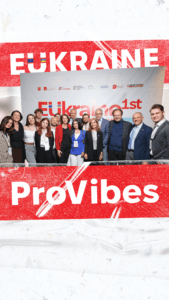
In late November, the FMS co-hosted a major conference in Kyiv to present ideas for Ukraine's progressive future. The priorities of our social democratic colleagues can be found here: https://pes.eu/pes/progressives-unite-in-kyiv-to-reaffirm-solidarity-with-ukraine-and-support-a-just-peaceful-european-future/
Montenegro: EU accession and green transition
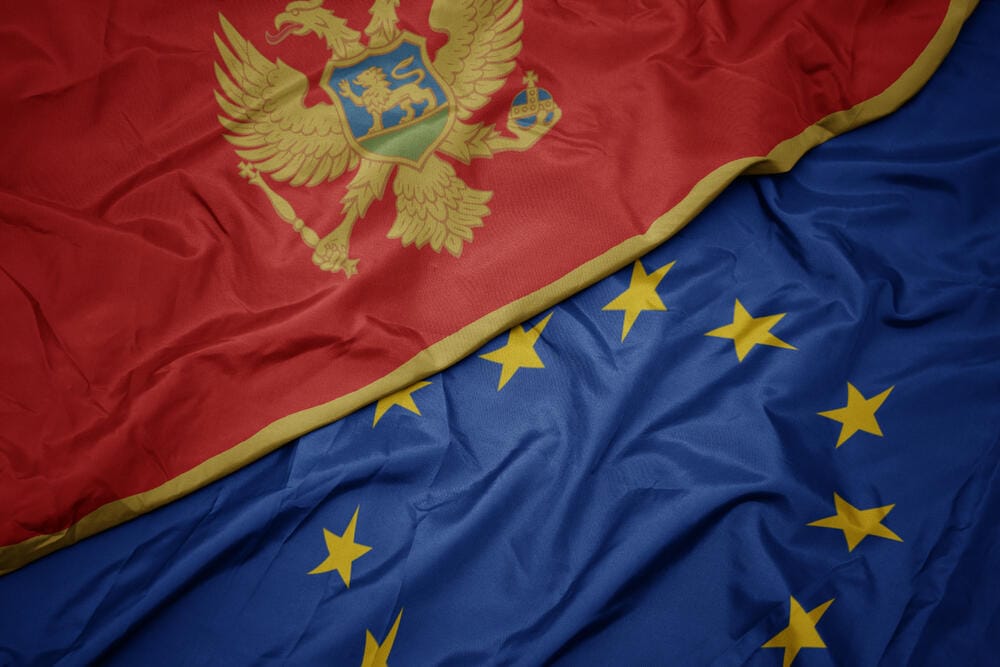
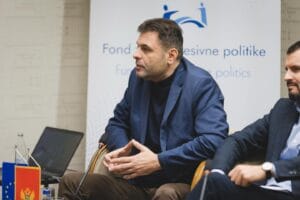 From Ukraine to Montenegro, another country making great strides towards EU membership. Montenegro has been a candidate member since 2010 and hopes to join in the coming years. Yet significant challenges remain, especially in the area of green transition.
Although the geographyof Montenegro lends itself perfectly to renewable energy generation, much of its energy supply is still dominated by fossil fuels. Together with social democratic and green partners, the FMS spoke about this at a conference in Podgorica. The central question was how EU accession and green transition can together form a positive economic momentum, with sustainable growth and jobs.
In 2026, this process may gain momentum. The focus is therefore very much on the EU-Western Balkans Summit, which will take place in Montenegro in June. More on this conference:
https://www.cdm.me/drustvo/fond-za-progresivne-politike-fokus-usmjeren-na-pravednu-zelenu-tranziciju/
The Western Balkans: beyond ‘EU fatigue’
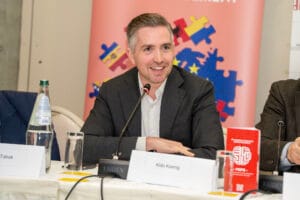
The EU-Western Balkans Summit will also feature the other candidate countries: Bosnia and Herzegovina, northern Macedonia, Albania, Serbia and Kosovo - together with Montenegro the so-called “Western Balkan Six”. All aspire to EU membership but face varying challenges in terms of economics, geopolitics and political stability.
A recurring problem is EU-fatigue. There is a sense in many countries that accession seems to be close every time, but is then delayed or blocked. It is up to the EU to turn this narrative around. After all, without the Western Balkans, the European Union is incomplete.
This requires not only reforms in candidate countries, but also reflection on the EU itself. What does a strong EU in 2040 look like? And how do we prepare our institutions for further enlargement? In 2026, FMS will continue to push for collaborations and policy proposals in this area. Where autocrats want to undermine the EU and conservatives want to freeze it, we argue for change and institutional innovation.
See also our December 2025 joint statement:
https://feps-europe.eu/news/friends-of-the-western-balkans-joint-statement/
and this recent piece on the EU's Multiannual Financial Framework:
https://feps-europe.eu/publication/financing-enlargement-via-the-2028-2034-mff/
 Armenia: European course under pressure
 Armenia: European course under pressure
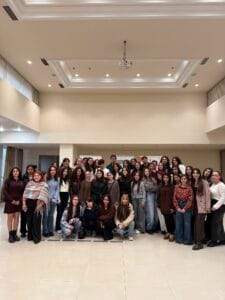
Also in Armenia European rapprochement is visible. Since Azerbaijan's ethnic cleansing of Armenians in Nagorno-Karabakh, it has become clear in Yerevan that the Russian security umbrella offers little protection. Armenia is geopolitically isolated and therefore seeks intensified cooperation with European partners, both security and economic.
Crucial elections are scheduled for 2026. Prime Minister Pashinyan is trying to convince the population of a pro-European course, but at the same time there are concerns about the rule of law and the liberalisation of the economy under his Civil Contract party. To address these issues, colleagues from SD Platform Armenia organised a major conference on labour rights in late 2025, together with Armenian trade unions.
For a strong and democratic Armenia, social politics is essential. The FMS will continue to support colleagues who work for this every day in 2026. Read more about the work of SD Platform Armenia here!
Moldova: reforming in a decisive moment
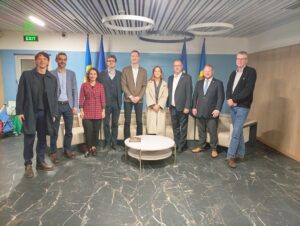 Moldova is accelerating the EU accession process, boosted by multiple election victories by the outspoken pro-EU party PAS and President Maia Sandu. With no national elections scheduled for the next two years, this is the time to implement necessary reforms.
These include a focus on two major challenges: an economy that has been stagnant for years and is not benefiting sufficiently from liberalisation policies, and the role of Transnistria, the Russian-backed renegade region on the eastern bank of the Dniester River. Transnistria is now heavily dependent on EU trade, and further integration with Moldova seems to be in the interest of almost all concerned - except the Kremlin.
The FMS visited Moldova in October 2025, speaking to progressive partners about the importance of political pluralism and pro-European alternatives that are also critical of current economic policies. In 2026, supporting these forces remains a priority for the FMS, with the goal of a strong, democratic Moldova within the EU.
For more background on the polarised political situation, we recommend this article by Dorina Baltag and Amy Eaglestone:
https://www.tandfonline.com/doi/abs/10.1080/09662839.2025.2583337