 EN
EN  NL
NL 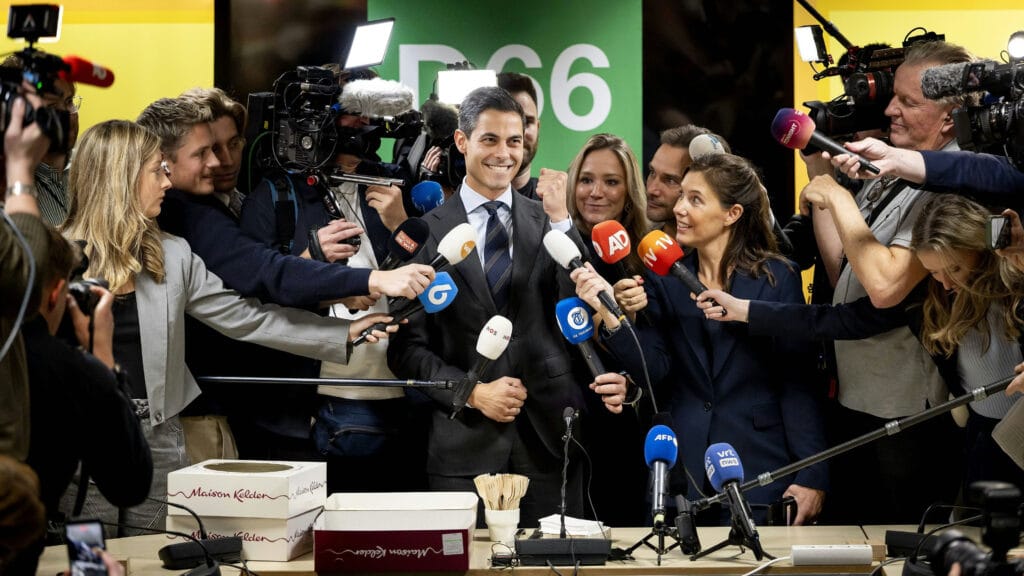
D66, VVD and CDA this week presented their coalition agreement for the upcoming minority government that will govern the Netherlands under Rob Jetten's leadership. That the cabinet will have a significantly higher pro-European signature than its predecessor is clear from the outset. The three coalition parties devote considerable attention to geopolitical and European affairs, with the aim of bringing the Netherlands back into the ‘left-hand row of influential countries’ - a position the Netherlands undeniably lost under the Schoof government.
One passage in this coalition agreement that deserves critical scrutiny is about the possible future enlargement of European Union member states. In the past, European enlargement was often sensitive in the Netherlands; in the recent past, the Dutch government blocked the Schengen admission of Bulgaria and Romania, among others. Under the Schoof administration, the Netherlands additionally blocked plans to restrict the veto right of European countries during the accession process of candidate countries - a measure that could have accelerated many accession processes.
Whether the incoming Jetten cabinet does intend to support such a measure now, the coalition parties do not make it clear. They do write that enlargement should be viewed ‘realistically’ and ‘from a geopolitical context’, possibly implying that any accelerated European expansion of countries like Ukraine, Moldova or countries in the Western Balkans could be seen as necessary from a European geopolitical perspective. Countries, according to the coalition parties, do need to continue to meet the Copenhagen criteria in order to complete be allowed to become a member. In that little word ‘fully’ seems to be the crux, because it is followed by the following passage:
"We connect candidate countries with a strategic position, such as countries in the Western Balkans, with the Netherlands and Europe through intensified cooperation. We are committed to a multi-speed Europe.”
The coalition parties thus first stress the importance of the Copenhagen criteria for complete member states, but then talk about “different speeds” in cooperation with countries in the Western Balkans. In doing so, they seem to imply that forms of European cooperation and integration could take place differentially, even without EU membership, and perhaps within the framework of the European Political Community, as the Luxembourg foreign minister Xavier Bettel, like D66 and VVD, is a member of the liberal European RENEW family, has previously implied.
Earlier, voices were raised in the Netherlands in favour of such a construction: an expert such as Femke van Esch wrote in 2020 that differentiated integration would enable the EU to ‘make its diversity its strength by nature”. Allowing some states to go further than others on some topics would allow for both ‘cooperation and preservation of individuality’. Whether such a theme-dependent European patchwork quilt is also the cabinet's vision is doubtful; in Van Esch's thesis, all participating countries are also EU member states.
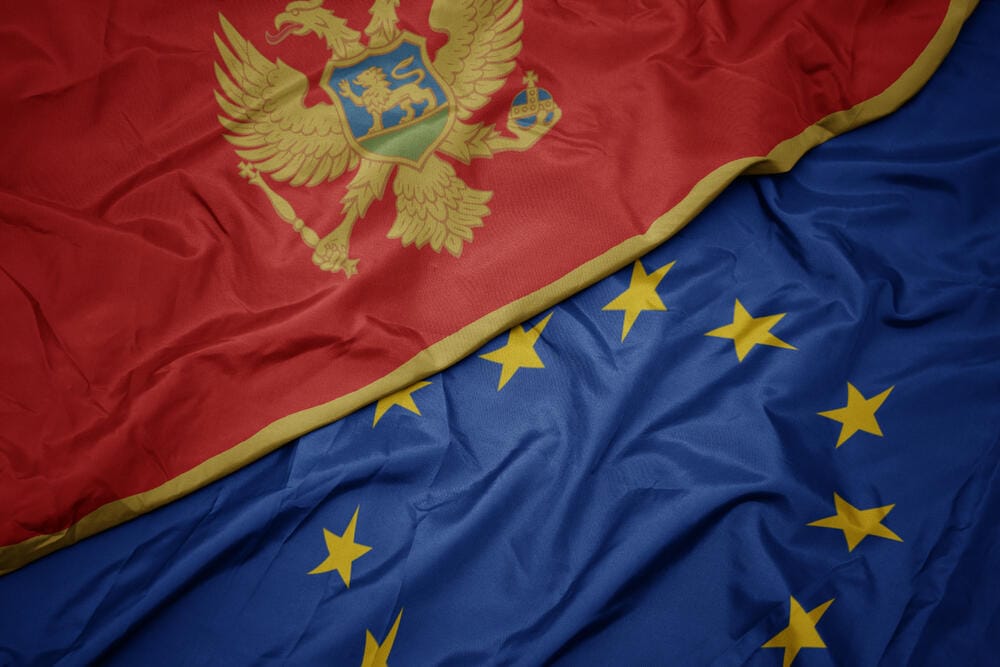
In the current version of the coalition agreement, it remains unclear what this future cooperation should then look like without EU membership: would countries like Montenegro, Serbia or Bosnia & Herzegovina already be able to claim participation in the European free trade market, or have access to European Council meetings? Such an interpretation is not without risks: it could mean that candidate countries would have fewer incentives to implement reforms in internal organisation in order to participate in European cooperation. In turn, the EU could be more quickly associated with internal tensions in the democratic rule of law in its sphere of influence. The concept could even mean that current member states see an opportunity to pursue a ‘thinner’ version of EU membership to escape normative EU policies.
So it will be interesting to follow how the future foreign minister will balance on the thin rope of European enlargement: the concept of “different speeds” offers opportunities, but the coalition will have to keep looking in its mirrors.