 EN
EN  NL
NL 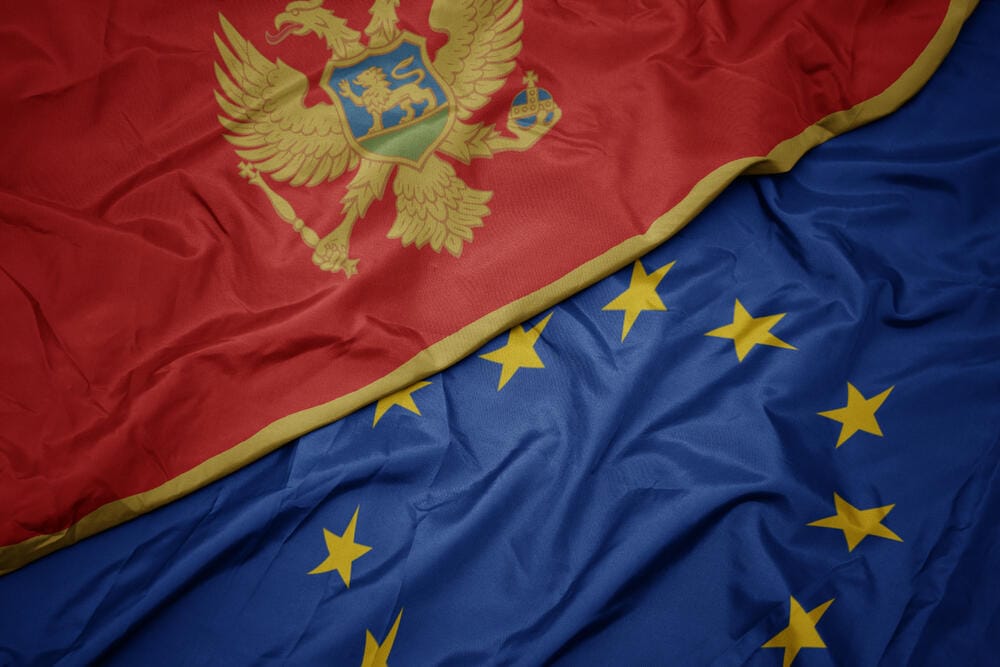
This series is written in collaboration with International Foundation GroenLinks (IFG).
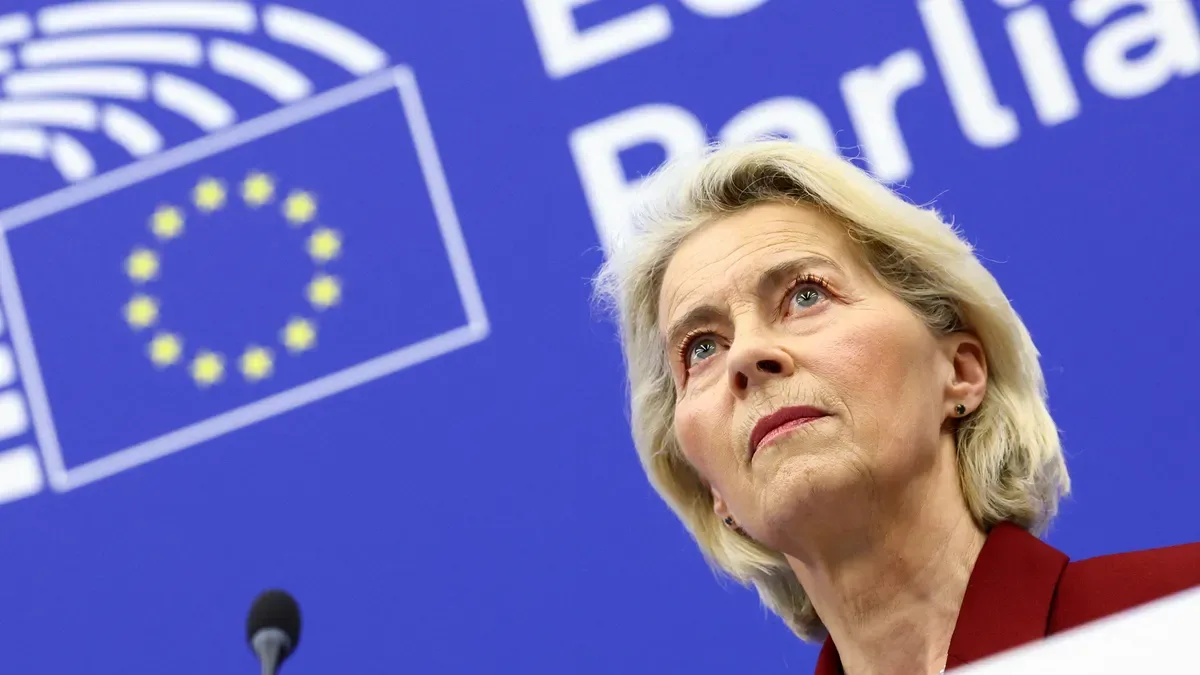
EU enlargement is back on the agenda. After Russia's full-scale invasion of Ukraine in 2022, and amid growing uncertainty about the United States’ role in Europe, EU leaders have increasingly stressed the need to expand the Union. Closer cooperation with countries in Eastern Europe and the Western Balkans is seen as important for the continent's security and independence.
Yet joining the EU is a complex process. Since reforms in 2021, candidate countries must complete negotiations across 32 policy “chapters”, grouped into six thematic “clusters”. These reforms aim to bring national laws and institutions in line with EU standards. Much attention is usually given to the so-called “fundamentals” cluster, which covers areas such as the rule of law and public administration. However, other clusters are equally demanding.
Particularly challenging and complex is Chapter 27, on Environment and Climate Change. Its demands are aligned with the European Green Deal, which aims for climate neutrality by 2050 and therefore requires major investments, strong administrative capacity and coordination between institutions. It also has major social consequences for candidate countries, especially those where jobs and energy systems still depend heavily on fossil fuels.
In this series, we examine how candidate countries are coping with the challenges presented to them by the climate chapters of the EU accession procedure. We analyse their progress on reforms and focus on the complex dynamics of green transition, democratic legitimacy, and social changes. In this article, we zoom in on a small frontrunner: Montenegro.
State of affairs
Montenegro is largely viewed as the most advanced EU candidate country as of now. The country has already closed almost half of its negotiating chapters. In December 2025, EU member states proposed to start drafting Montenegro's accession treaty. EU accession in either 2027 or 2028 for Montenegro is, according to some, regarded as a realistic prospect.
Ecology has always had an important symbolic role in the self-perception of the country, says Ćazim Lisičić of the Fund for Progressive Politics (FPP). The FPP, which Lisičić describes as “the only political foundation in Montenegro” and which is connected to the Social Democratic Party of Montenegro, celebrates its 10-year anniversary next year, in what could become a historic year for the small country. But for that to become a reality, there is still a lot that needs to happen, Lisičić says. Although historically Montenegro has presented itself as an ‘ecological state’ (solidified in the 2007 constitution), the subject of green transition is seldom at the top of the agenda in everyday politics. Economic problems often take priority - which is also reflected in Montenegro's EU accession progress.
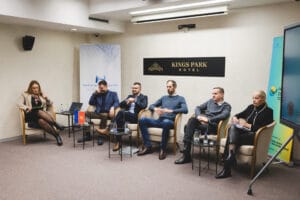
Lisičić’ FPP organised the first conference on Chapter 27 reforms last year in Podgorica.
Overshadowed
Montenegro passed a National Energy and Climate Plan in alignment with EU chapters 15 and 27 in parliament last December, which ensures its legal framework is in order for accession. But the country faces a clear lack of enforcement, creating a division between the reality on paper and in practice, Lisičić says. Enforcement requires investment in capacities - but for that, Chapter 27 is often overshadowed by other priorities, especially the ‘fundamentals’ on the judiciary and the rule of law.
If Montenegro is serious about closing negotiations in two years, the green transition should gain a lot more attention, Lisičić thinks. That is why the FPP organised a conference on the matter, the first of its kind, in December of last year, bringing together experts, politicians and NGOs. The conference helped to foster and exchange knowledge on the matter. There is a broad sense among both the government and the public, Lisičić says, that 2028 could be the accession year - and positive steps are being taken, but some particularly heavy challenges remain.
Challenges
First of all: the transition required under Chapter 27 of the EU acquis is extremely expensive. Lisičić estimates a cost of around €2 billion in investment to close the chapter - an amount Montenegro is not able to finance on its own. In addition to that, the high costs of aligning with the EU's climate demands are often with raised eyebrows among both politicians and the public. Understandable, Lisičić says: why spend such large sums of money when so many people are still struggling financially so much? Critics point to a certain double standard from the EU: its demands towards candidate countries are very high, whilst in the meantime, many EU member states are far from compliance with the EU's Green Deal and contribute to the acceleration of climate change every day.
On top of that, Montenegro is still heavily dependent on the coal-powered Pljevlja power plant. The plant produced around 40% of the country's electricity in 2024 and has a major social role in the region: around 30 to 40% of the population around Pljevlja has jobs that depend on the coal industry in one way or another. According to Lisičić , it is right here where the word just enters the transition debate. Simply shutting down the Pljevlja power plant would have devastating consequences for local job security and the economy of the region - and with that, undermine the democratic mandate for the EU accession process as a whole. Although Montenegro wants to close negotiations fast, Lisičić underscores the importance of climate transition as a careful, long-term process: workers need to get the chance to re-educate and change careers over time.
Lisičić stresses that there is an important need for a larger role for political foundations and NGOs in this dilemma. They could play a much larger role in building a national conversation around climate transition - especially in Pljevlja, where there is visible fear and uncertainty around the future. Right now, he says, it is important to educate young people and encourage them to think more broadly about the positive sides of the transition - including the possibility of new sectors and jobs. NGOs and political foundations could more independently present positive examples of just transitions in other parts of the world, where countries have shifted their dependency on fossil fuels to renewable energy, with positive effects not only for the local and job security, but for the wellbeing of nature and national health as well.
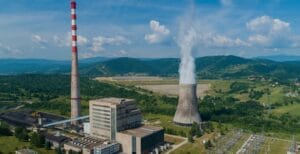
The Pljevlja power plant symbolises the biggest challenge Montenegro faces for its climate reforms.
Positivism
Although these challenges seem like very steep hills to climb for the mountainous country, Lisičić chooses to remain positive. Younger generations are increasingly concerned with ecology, he says; they will more often than not back an ambitious green agenda in alignment with the EU chapters. Furthermore, he thinks, this is the time for the EU to step up its game: if the EU is serious about its willingness to welcome Montenegro into the Union, it should invest more in Montenegro's institutional capacity to enforce the already well-aligned legal framework.
Montenegro has one clear advantage: its smaller size. Where neighbouring Albania faces a green transition that will probably lead to the closing of no less than four coal-powered power plants, Montenegro only has one. Indeed, the country needs more financial support, and its public debate on climate should be intensified, but the country's green transition is probably much more manageable than that of its neighbours - making its ambition to join the EU in the upcoming years quite realistic. And finally, because of these factors, Montenegro has the potential to become a shining example for the region in its path towards EU membership.
Written by Jens Bosman (FMS) and Yesmin Ayadhi (IFG).
Click here for parts two and three focussing on Albania and Ukraine respectively.