 EN
EN  NL
NL 
source: Wikimedia Commons
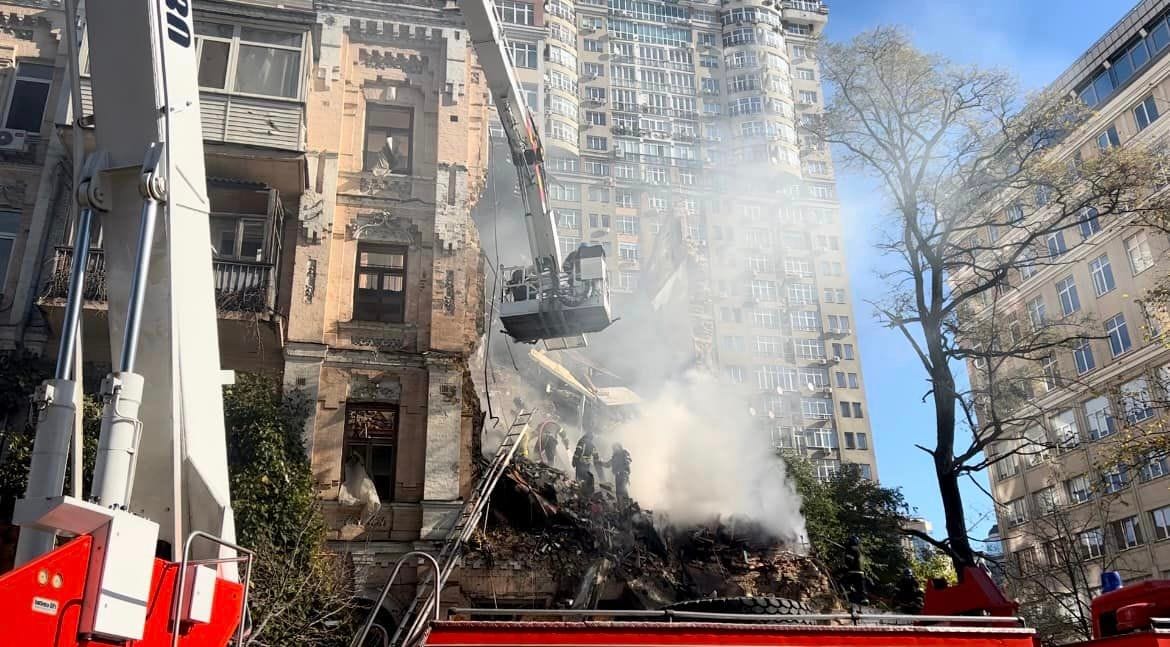
Since the start of the Russian invasion of Ukraine in February 2022, the use of drones has increased dramatically. Whereas unmanned aircraft were initially used mainly for reconnaissance, they have now become indispensable for attacks, artillery guidance and electronic warfare. The number of drones deployed has increased significantly, particularly in the past year, with far-reaching consequences for the course of the war.
For many Ukrainians, the buzz of a drone does not represent technological progress, but an immediate threat. Drones have become a core component of modern warfare: relatively inexpensive to produce, scalable in large numbers and heavily dependent on international supply chains. Russia uses different types of drones for different purposes. For example, Iranian-designed Shahed drones (renamed Geran-2 by Russia) are frequently used to attack civilian infrastructure, while lighter drones such as the Gerbera – largely constructed from inexpensive materials – are mainly used to deceive and overload air defences.
Although both Ukraine and Russia produce drones on a large scale, Russia has significantly greater industrial capacity. What makes this war particularly bitter is that much of the crucial technology in Russian drones does not originate from Russia itself. Research An analysis of downed drones shows that microchips, cameras, and other electronic components often originate from Western countries, including the Netherlands.
These components are rarely exported directly to Russia. They find their way there via distributors and intermediary countries, often through complex trade routes in which Chinese transit plays an important role. As a result, the war in Ukraine is not only being fought on the battlefield, but also in global trade networks. This raises an uncomfortable question: how is it possible that Dutch technology, intended for civilian applications, ultimately ends up in weapons that are used against a democratic society?
A web of sanctions and detours
Since the invasion, the European Union has introduced the strictest sanctions package in its history. These measures not only restrict trade with Russian companies, but also impose far-reaching export controls on so-called dual-use goods: products that can be used for both civilian and military purposes.
The sanctions have been progressively tightened throughout the war. They include transport and transit restrictions, a ban on the diamond trade, measures against Russia's ‘shadow fleet’ involved in oil exports, and heavy financial sanctions. With the eleventh sanctions package (June 2023) the EU explicitly emphasised for the first time the importance of combating sanctions circumvention via third countries.
In 2024, the fourteenth package, including a ban on LNG transit and further restrictions on Russian access to international payment systems. In early 2025, Member States agreed on a sixteenth package, targeting aluminium, ships in the shadow fleet and additional export restrictions on critical technology, among other things.
The European Commission also publishes guidelines to help companies identify risks. An important tool is the so-called High Priority Items list, which contains goods that are particularly susceptible to military misuse, such as integrated circuits, radio frequency components and navigation technology.
Nevertheless, enforcement remains complicated. Steps have certainly been taken in the Netherlands in recent years: at the beginning of 2024, three persons arrested on suspicion of sanctions evasion in the export of technology with potential military use, and in 2025 new ones followed FIOD investigations to companies that supplied computer hardware to Russia via indirect channels. At the same time, international supply chains are long, transit countries do not always cooperate, and many electronic components are freely available worldwide.
This leads to a painful contrast. While Europe is investing billions in air defence and protection against Russian drones, some components of those same weapons appear to originate from European factories. Since 2024, the Netherlands has also been actively supporting Ukraine with air defence and counter-drone systems, while the government is simultaneously investigating how Dutch technology ends up in Russian weapons through indirect channels.
Responsibility in the chain
The key question is not so much whether Dutch companies are deliberately violating sanctions, but whether their products are still contributing to Russian warfare through indirect means. The discovery of recently produced Dutch chips in Russian drones underlines that responsibility does not end at the factory gate, but extends throughout the entire supply chain: from manufacturers to distributors and resellers.
The European Commission reminds companies of their duty of care. Directives emphasise the importance of customer research, extra vigilance when exporting to high-risk countries, and additional checks on sensitive products. In theory, these instruments clearly. In practice, however, compliance often appears to be limited to what is strictly necessary from a legal point of view.
That is why Ukraine and its European partners are calling on companies to respect not only the letter but also the spirit of the sanctions. This requires stricter internal controls, active monitoring of re-exports via distributors and greater transparency about supply chains. Some companies are now taking additional measures, such as contractual re-export prohibitions or technical limitations, but these are still exceptions.
Values versus profit
Ultimately, this debate is about more than trade and regulations. It touches on the values that the Netherlands and Europe claim to defend. Solidarity with Ukraine means not only military support, but also taking a critical look at the way our own economy functions.
The paradox is clear: Europe is building air defences to protect Ukraine from Russian drones, while European technology indirectly contributes to the production of those very same weapons. As long as this tension persists, solidarity will remain incomplete.
Vigilance is therefore essential. Governments can better support companies with knowledge and international cooperation, but moral responsibility cannot be completely outsourced to regulation. Every component that ends up in Russian weapons via a detour symbolises a choice: between profit and values, between short-term interests and long-term responsibility.
The war in Ukraine shows that the struggle for freedom is not only fought on the battlefield, but also in trade routes, legislation and ethical choices. If Europe wants to protect the values of democracy, freedom and the rule of law, it must show that those values outweigh economic gain. Closing the loopholes in the sanctions regime is not a technocratic exercise, but a moral imperative. Only then can Europe credibly claim that its technology contributes to peace, not oppression.
What specifically needs to be improved?
This responsibility requires more than voluntary compliance. As long as sanctions remain vulnerable to circumvention, the gap between European values and the practice of international trade will continue to exist. A number of steps are obvious:
- More responsibility for companies in the chain
Companies that produce or trade in sensitive technology should not only monitor their direct customers, but also pay attention to resales via intermediaries and third countries. This reduces the likelihood of components ending up in Russian weapons.
- Stricter rules for high-risk technology
The EU may impose stricter licensing requirements on electronic components commonly found in Russian drones, particularly when exporting to countries where sanctions evasion is common.
- Greater transparency regarding end use
Companies may be required to provide greater insight into who ultimately uses their products. This enables supervision without completely halting legitimate trade.
- Better cooperation in enforcement
As sanctions evasion is cross-border in nature, closer cooperation between European customs and investigative services is necessary in order to identify suspicious trade routes more quickly.
- Support for companies wishing to avoid risks
Governments can assist businesses by providing clear guidelines, risk information, and secure reporting channels, so that refusing suspicious orders does not lead to a competitive disadvantage.