
 EN
EN  NL
NL US does not want allies, but followers
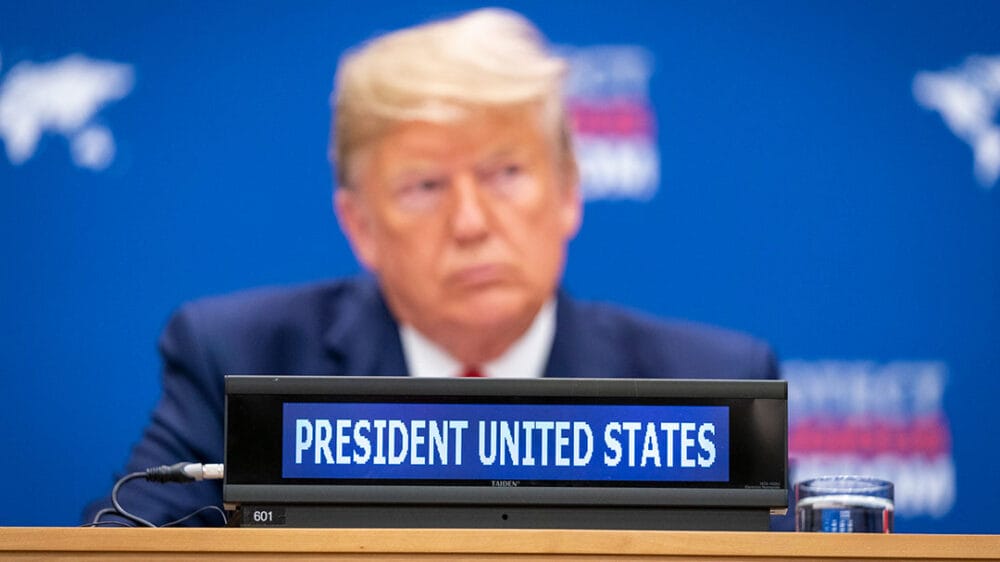
“Passing ships will be burned”. Those were the words with which the Iranian Revolutionary Guard announced on 2 March that the Strait of Hormuz would be blocked. Ships that tried to cross anyway would be set on fire. US President Trump made it clear that his allies would have to help open the Strait of Hormuz, and acting passively would be “a foolish decision”. Yet Germany, Spain and Italy indicated no mission [...] (yet).
Where is the escalation between Afghanistan and Pakistan coming from?

Photo: Afghan families cross the border after their forced departure from Pakistan and return to a precarious situation in Afghanistan (Flickr) Tensions between Afghanistan and Pakistan have risen sharply again following a major attack in Kabul. A Pakistani airstrike on a rehab clinic is believed to have left potentially hundreds dead, according to the Afghan [...]
Mass displacement, white phosphorus and ecocide: where is our focus on Lebanon?

Source: Flickr The images are by now painfully familiar: families rushing out of their homes, residential areas turning into rubble and a population with nowhere that seems safe. Only this time, these images do not come from Iran or Gaza, but from Lebanon. Since the beginning of March, the Israeli offensive in the country has intensified rapidly. Hundreds of thousands of people are striking [...]
Meet our new colleagues!
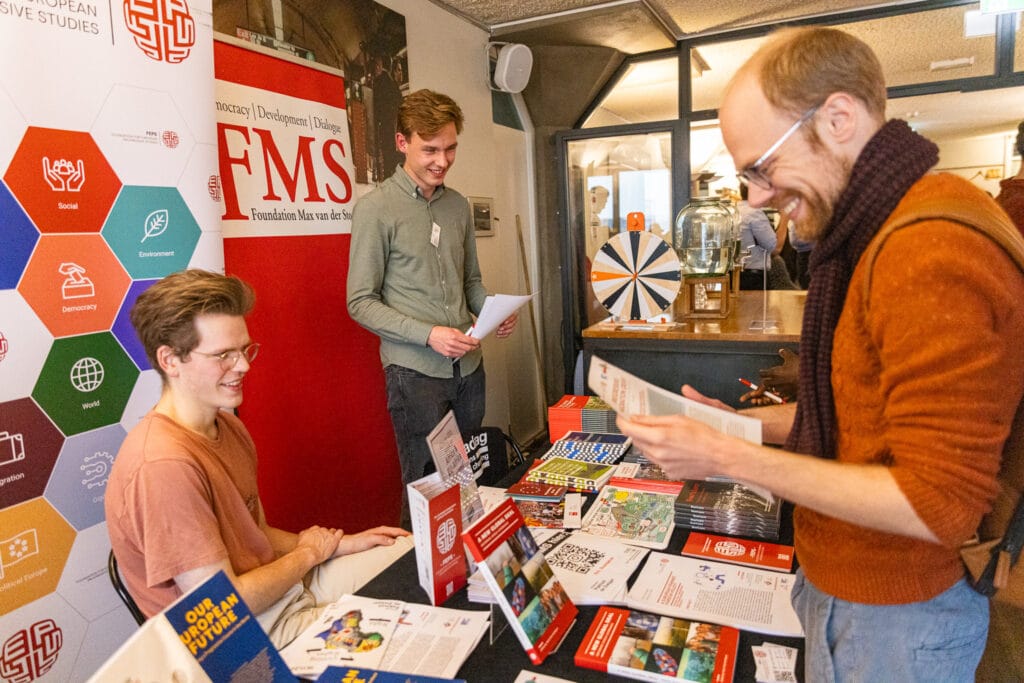
Photo: Interns at work on Africa Day 2024 Tije Smeijsters Hello FMS network! My name is Tije and this month I started as an intern at FMS together with Jens and Martha. In the coming months, I will mainly be engaged in lobbying and advocacy work for a more just and coherent Dutch policy towards [...]
Why Dutch municipalities need to reinvent themselves internationally: in conversation with Dion van den Berg
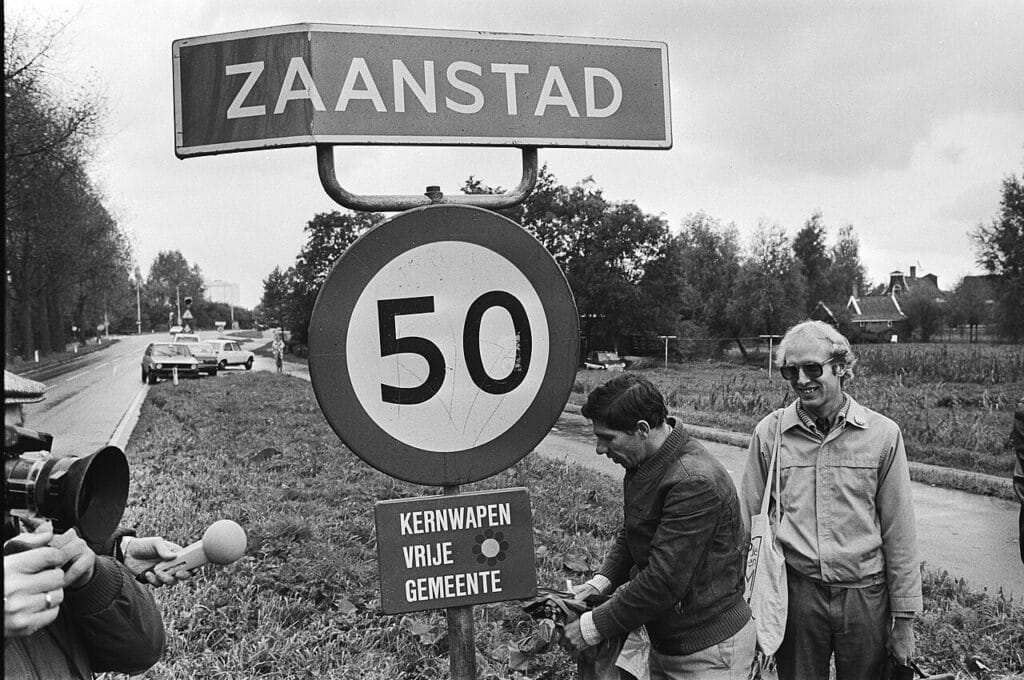
Alderman Nieuwenhuizen unveils a “Nuclear-weapon-free municipality” sign in the municipality of Zaanstad in 1982, the first municipality to do so. On the right Nico Schouten of the action committee Stop the Neutron Bomb. Source: National Archives. In view of the upcoming municipal elections on 18 March, FMS recently organised a political café on the impact of local politics on foreign countries: [...]
Solidarity goes beyond our borders

This article originally appeared in 80 years of the Labour Party - On the shoulders of giants | JUBILE NUMBER RED After a long night, the train arrives at the station in Kyiv. The sun is shining brightly and the temperature is pleasant. Nothing this morning indicates that just over 24 hours ago bombs came down on apartment buildings [...]
Retrospective Political Café: Local goes International

How does your vote in local elections affect foreign countries? According to the speakers at our political café ‘Local goes international’, local politics plays a very big role. Because international solidarity does not only arise in The Hague, Brussels or at the UN, but precisely also locally - in the city, on the streets and in the municipal council. Activism and local democracy [...]
Billion-dollar projects for prestige: Sisi's Egypt in search of international recognition
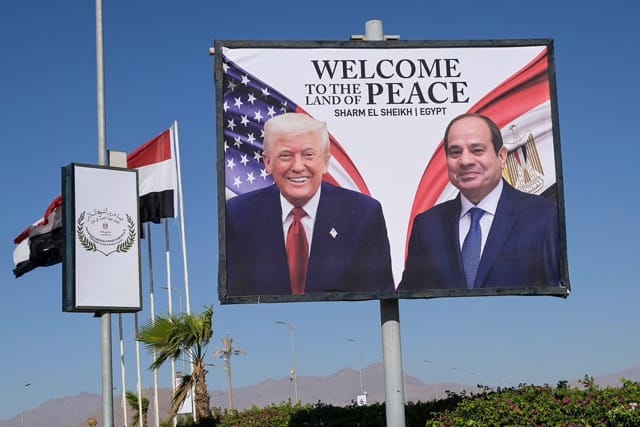
(Source: AFP) Sisi's Egypt has recently been busy putting itself on the map as an innovative, ambitious country eager to lend a helping hand as a mediator in the region. A few months ago, for instance, the North African country grandiosely opened the Grand Egyptian Museum in Cairo. The museum stands [...]
Tunisia 15 years after Arab Spring: hopes of democracy dashed

Source: FETHI BELAID / AFP Street vendor starts the Revolution An extraordinary and shocking protest triggered a historic chain reaction in early 2011. Tunisian street vendor Mohamed Bouazizi set himself on fire out of dissatisfaction with his hopeless situation. Bouazizi's self-immolation sparked a historic movement, the Arab Spring, in which several corrupt regimes in the [...]
Democracy experienced under pressure in Belgrade

Source: Wikimedia Commons During a recent visit to Belgrade, including participation in an EFDS network meeting on democratic developments in the Western Balkans, the contrast between formal political analysis and the lived reality on the ground was impossible to ignore. Within the walls of a hotel conference room, participants spoke in abstract terms about the ongoing democratic decline in Serbia. [...]