 EN
EN  NL
NL 
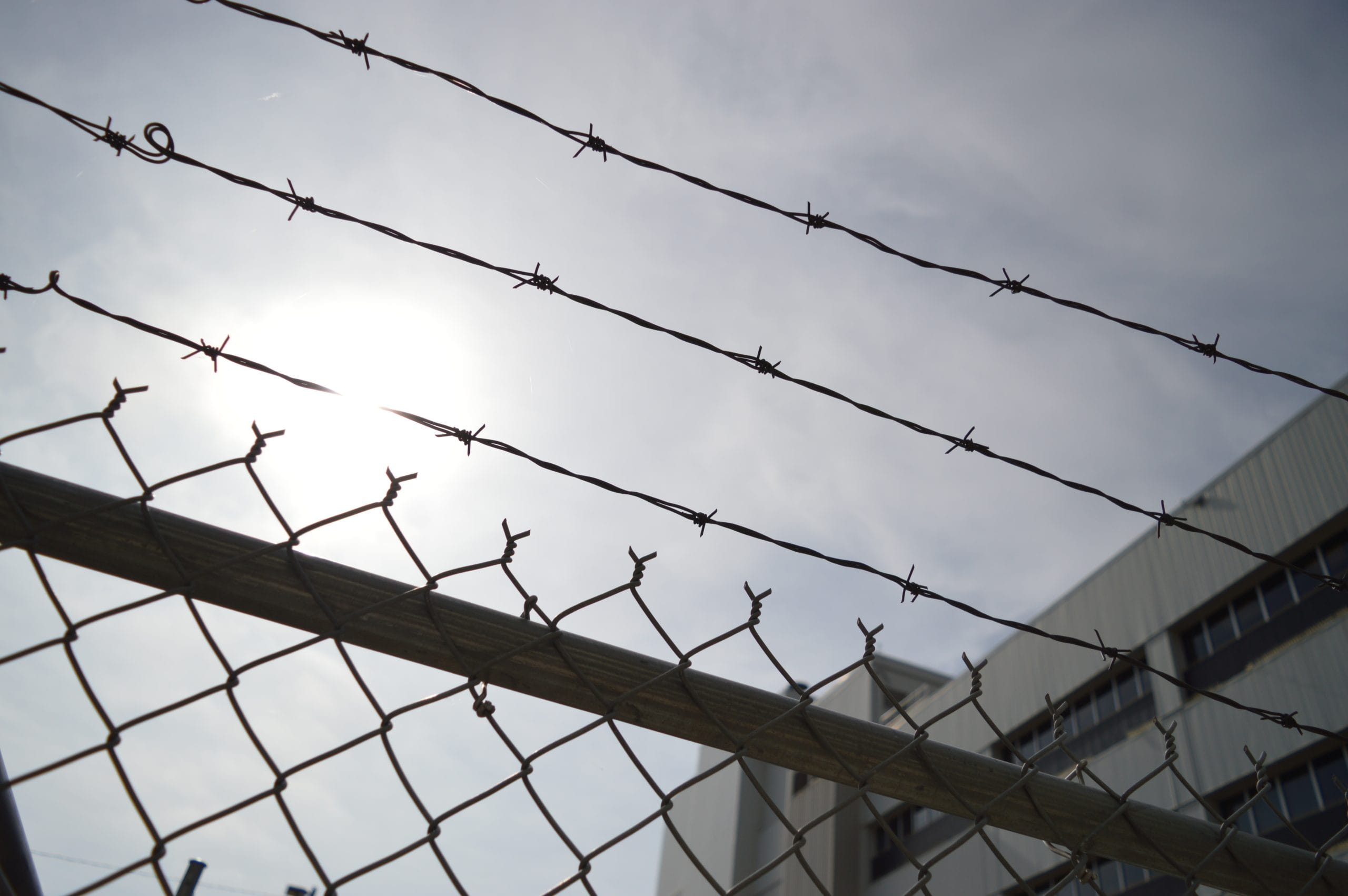
Photo: a fence with barbed wire (Rawpixel).
On 17 June 2026, the European Parliament adopted the new Return Regulation, the strictest immigration law in the history of the EU, with the support of radical and far-right political groups. A key aspect of this return law is the option for Member States to send asylum seekers whose cases have been exhausted to a return hub. Charlie Weimers, a Member of the European Parliament for the Sweden Democrats and a member of the ECR Group, even stated that ‘’the era of deportations has begun’.
The Netherlands among the EU frontrunners for a return hub
In order to address the widespread social and political perception that migration is the greatest problem of all time, the Jetten government is seizing the opportunity to create a repatriation hub with both hands. This was revealed in early September by the Volkskrant that the Netherlands, together with Denmark, Germany, Austria and Greece, forms part of a leading European group whose aim is to reach agreements as soon as possible with a country outside the EU in order to establish a return hub there.
The fact that it is mainly countries with autocratic leaders who are willing to allow a return hub to be set up on their territory has not, for the time being, prevented the leading group from striking deals. For example, the previous government tried to open a repatriation centre in Uganda and the United Kingdom struck a deal with Rwanda to process asylum claims there. Both countries are controversial partners. Uganda, for example, has gained a reputation for its strict anti-lhbti legislation. The country, under the rule of Yoweri Museveni, is not known for its respect for human rights, and there is systematic erosion of democracy, such as the suppression of the opposition. In Rwanda, too, under the leadership of Paul Kagame, there is the suppression of human rights and the erosion of democracy, such as rigged elections. About three years ago, the EU concluded a similar agreement with the autocratic Tunisian President Saied. Put simply, in exchange for economic investment from the EU, Tunisia promised to step up border controls and improve the return of migrants. As a result of the deal, the Tunisian authorities rounded up people and subsequently dumped them in the desert. This had resulting in several deaths, including a mother and her child.
In practice, it turns out to be more difficult
Another major criticism of the establishment of return hubs is that they are not located on EU territory, with the result that they fall outside EU jurisdiction. In practice, this means that it is impossible to verify whether the third country is complying with human rights conventions and the principle of non-refoulement: the prohibition on returning refugees or asylum seekers to a country where they face a risk of persecution. If asylum seekers are in fact sent to return hubs where human rights violations take place, this means that European courts will have no power to exercise oversight in this matter. As a result, these people will be left to their own devices in a de facto prison, from which they cannot leave of their own accord and where they have no access to legal assistance.
This risk is anything but hypothetical. So far, the courts have time and again blocked attempts to send people to a return hub. This is how a flight from the UK to Rwanda was ultimately prevented from taking off, because the European Court of Human Rights ruled that there was a real risk of ‘’irreparable suffering’. A similar attempt in Denmark to set up a return hub in Rwanda faced a barrage of criticism from, amongst others, human rights organisations and eventually came to a standstill as well. The Italian government even had to collect a group of 12 asylum seekers from Albania, after they had been sent there to a return hub. The result is that, so far, the centres have hardly been used for their intended purpose. The Albanian centres were so often empty that they were temporarily used to house stray dogs, and the UK’s Rwanda plan was eventually scrapped entirely before a single flight ever took off.
As if the legal risks and the likely human rights violations were not enough, there is also a significant political risk associated with the model of shifting responsibility for migration. By opening return hubs, but also by entering into migration deals, such as those with Turkey or Tunisia, the EU is placing a lever of power in the hands of these countries. Partners in third countries can use this cooperation as a means of exerting pressure, for example by demanding more money or insisting that the EU turn a blind eye to human rights violations in exchange for complying with the deal. The EU-Turkey deal had already revealed that pattern, when Erdogan threatened to open the borders with the EU.
Symbolic politics
Detaining people and sending them to a country far beyond their own borders is therefore no longer a scenario that seems remote to us. It has become a realistic feature of European and Dutch migration policy. The Jetten government is seizing the opportunity to set up a return hub in response to the ‘migration problem’. But a solution that does not hold up legally, jeopardises human rights and makes the EU dependent on the goodwill of autocrats is no solution at all. It is merely symbolic politics designed to show that ‘something’ is being done. It would be to the government’s credit, before entering into any further agreements with a third country, to first explain how it intends to resolve the legal and human rights issues that have already been demonstrated in Rwanda, Albania and Tunisia, and not to hold that debate only when the first flight is about to depart.